
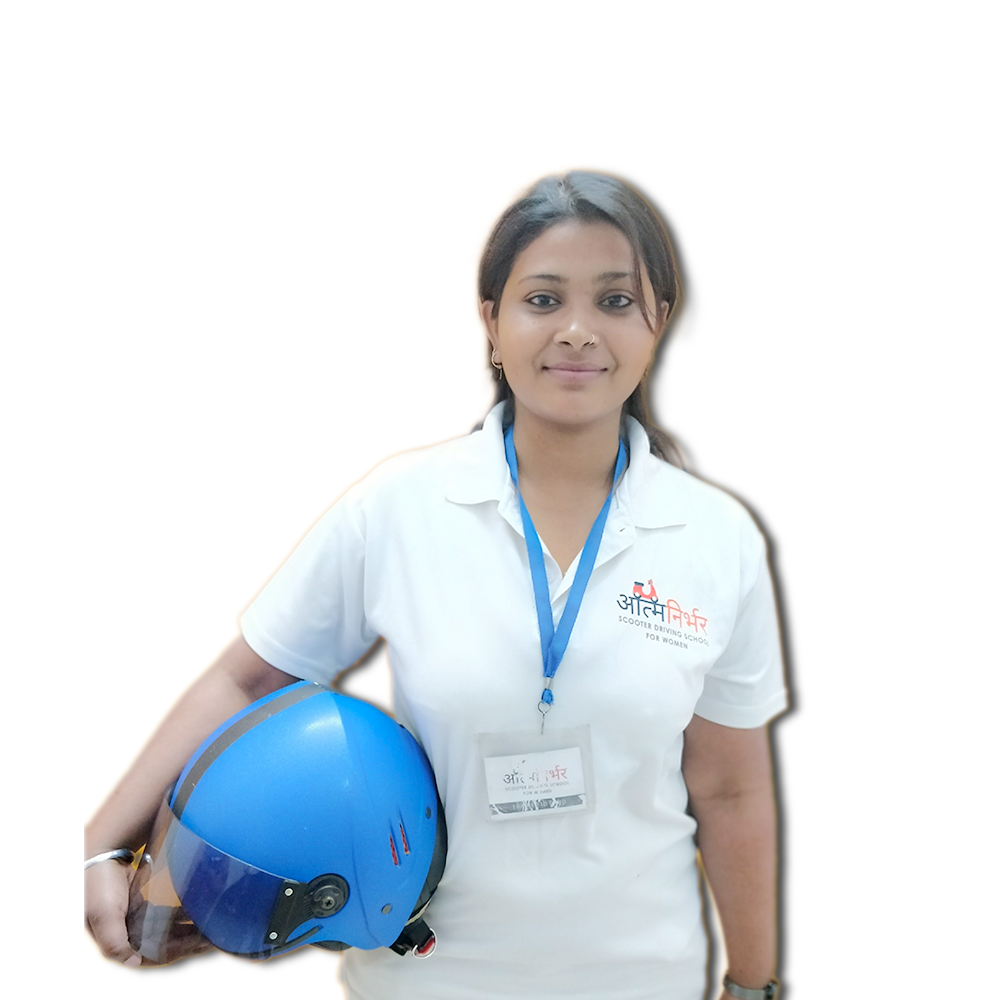
As Sushila walked home with her mother one evening, she looked down at her fingers, wrinkled and shriveled like raisins, worn down by years of dishwater and detergent. The smell of soap never quite left her hands. Like so many women in her village, she lived a life bound to domestic labor, suffocating under it. Trapped in the grip of patriarchal traditions, she had no voice, no say in the shape of her own life. And yet, Sushila had fire in her. She was not the kind of woman who settled for less than what she dreamed of.

Then fate intervened. Her employer offered her a job with Aatm Nirbhar, not scrubbing floors, but learning to ride a scooter. Who could have imagined that something as simple as two wheels would carry a woman from the margins into a future she’d once thought impossible?
This is the story of a woman who traveled the distance between being an ordinary, overlooked girl and becoming a symbol of women’s empowerment.
For years, she had spent her days as a maid in countless households, doing exhausting, thankless work that paid her far less than what she needed to survive. Even getting permission was a battle: convincing her brothers to let her learn to ride a scooter with Aatm Nirbhar took everything she had. It was her mother, standing beside her, who finally helped her win them over.

But once that freedom was hers, nothing could hold her back. And as she rose, she lifted others with her. As a senior trainer with Aatm Nirbhar, Sushila went on to train more than 500 women to ride scooters. Her own life transformed completely: she saved enough to buy a plot of land in her own name. To simply call her “financially independent” would almost undersell what she’d become. She was now a source of inspiration for every woman around her, a shaft of light cutting through the heavy clouds of poverty and patriarchal thinking.
But what mattered most wasn’t the scooter, or even the money. It was that Sushila had found her voice and was using it to speak up for other women like her. When the girls of her village saw her riding her gleaming brown Honda Activa, they saw, for the first time, a version of hope they could imagine for themselves.
Sushila was happy, but not finished. She was never one to stay still. Her next fight? Building a toilet in her own home, against the resistance of narrow-minded relatives, in a village where women still had no choice but to defecate in the open. She’s determined to give her nieces the basic sanitation and education that she herself was never given.